

International money transfers from Nigeria can be frustratingly expensive, with hidden charges and unfavourable exchange rates often consuming significant portions of hard-earned money. This is why understanding how to avoid high transfer fees in Nigeria has become essential for individuals supporting families abroad, businesses managing international payments, students paying tuition fees, and anyone engaged in cross-border transactions.
In a digital economy that is defined by how frequently money is spent and exchanged in the economy, this burden of banking commissions, service charges, and unfavourable exchange rate markups has become an existential threat to savings and profitability for both Nigerian businesses and individuals. Traditional banks and outdated transfer methods frequently charge exorbitant fees alongside poor exchange rates that further reduce what your recipient ultimately receives.
This comprehensive guide reveals how multiple strategies, modern platforms, and informed decision-making can help you reduce these costs, potentially saving thousands of naira on every transaction and ensuring more of your money reaches its intended destination rather than disappearing into institutional coffers.
Understanding the True Cost of International Transfers
Transfer expenses aren’t always transparent. They hide in multiple places and accumulate in different ways. Understanding how to avoid high transfer fees in Nigeria begins with recognising where those costs come from:
Direct Transfer Fees (The Obvious Cost):
These are the fees itemized for an electronic funds transfer. That is, the explicit charge your bank or transfer service imposes per transaction. This fee typically depends on the service provider and the amount being transferred.
Exchange Rate Markup (The Hidden Killer in International Transfers):
When sending money abroad or receiving remittances, banks and traditional money transfer operators (MTOs) rarely use the mid-market exchange rate (the true rate found on Google). Instead, they apply a markup. This is a percentage difference between the rate they bought the currency and the rate they sell it to you. This markup is basically pure profit for the service provider, but a silent charge to you. This results in a much higher effective cost than the stated transfer fee.
Intermediary Bank And Receiving Bank Charges:
In a typical international wire transfer, funds can pass through several banks before reaching the final destination. Each of these banks can deduct a service fee en route, which reduces the final amount received.
Unfortunately, the sender often only discovers these charges after the fact. Similarly, the recipient’s bank in Nigeria may charge a small fee for processing an incoming international transfer. These charges rarely appear upfront, surprising you when your recipient receives less than expected.
Proven Strategies on How to Avoid High Transfer Fees in Nigeria
Bypassing these costly traps requires a strategic shift in your banking and remittance habits.
Choose Specialized Money Transfer Services Over Banks
The single most effective strategy for avoiding high transfer fees in Nigeria involves using specialized international money transfer platforms instead of traditional banks. Companies like Yolat, Wise, Remitly, and WorldRemit focus exclusively on cross-border transfers, allowing them to offer significantly lower costs than banks handling transfers as a secondary service.
These platforms achieve lower costs by having specialized systems optimized specifically for international transfers, thereby reducing intermediary involvement.
Compare Multiple Platforms Before Every Transfer
Transfer fees and exchange rates vary between providers and change over time. Never assume the best option last month remains optimal today. Before each transfer, compare at different platforms on total cost, transfer speed, and recipient options. Comparing websites and apps can streamline this process, though verifying rates directly with providers ensures accuracy. Yolat’s transparent pricing makes comparison straightforward. You get to see exactly what you’ll pay and what your recipient receives before committing.
Consolidate Multiple Small Transfers Into Larger Ones
Transfer platforms typically charge either flat fees or percentage-based fees with minimum charges. This structure means that frequent small transfers cost proportionally more than occasional larger transfers.
Obviously, balance this strategy against practical needs. Emergency transfers can’t wait for consolidation. However, for routine payments like monthly family support or regular business expenses, consolidating significantly reduces costs over time.
Consider Multi-Currency Accounts
Multi-currency accounts allow you to hold various currencies, converting between them only when rates are favorable. For regular international transfers, these accounts enable you to convert naira to foreign currency during favorable rate periods, hold the foreign currency until needed for transfer and send foreign currency directly without additional conversion.
This approach works well for planned expenses like tuition payments, where you know the amount and timing in advance, allowing strategic rate optimization.
How Yolat Helps You Avoid High Transfer Fees in Nigeria
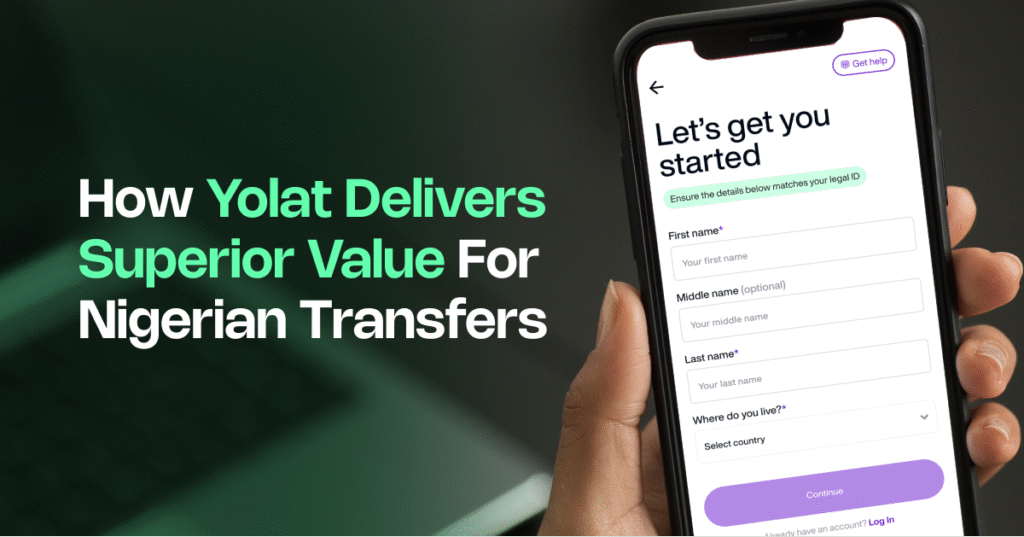
Yolat specifically addresses the challenge of how to avoid high transfer fees in Nigeria through multiple strategic advantages:
- Transparent Pricing: No hidden fees or surprise deductions. You see the total cost and recipient amount before confirming transfers, enabling informed decisions.
- Competitive Exchange Rates: Yolat provides rates significantly closer to mid-market rates than traditional banks, ensuring more of your money converts to foreign currency rather than disappearing into markups.
- Minimal Intermediary Involvement: Direct partnerships and optimized routing reduce correspondent bank fees that plague traditional transfers.
- Multiple Funding Options: Choose from bank transfers, card payments, or mobile money based on your convenience and cost preferences.
- Fast Processing: Quick transfers mean less exposure to adverse rate movements between initiation and completion, particularly valuable during volatile periods.
- Dedicated Support: Expert customer service helps resolve issues quickly, preventing costly delays or errors that create additional expenses.
Understanding how to avoid high transfer fees in Nigeria empowers you to retain significantly more of your money when making international transfers. By choosing specialized platforms like Yolat over traditional banks, comparing options before each transfer, consolidating smaller transfers, leveraging promotional offers, and optimizing timing based on exchange rates, you can reduce transfer costs by 50-80% or more.
Take control of your cross-border transfer costs now. Compare Yolat against your current transfer method and discover how much you could be saving on every transaction.
Leave a Reply