
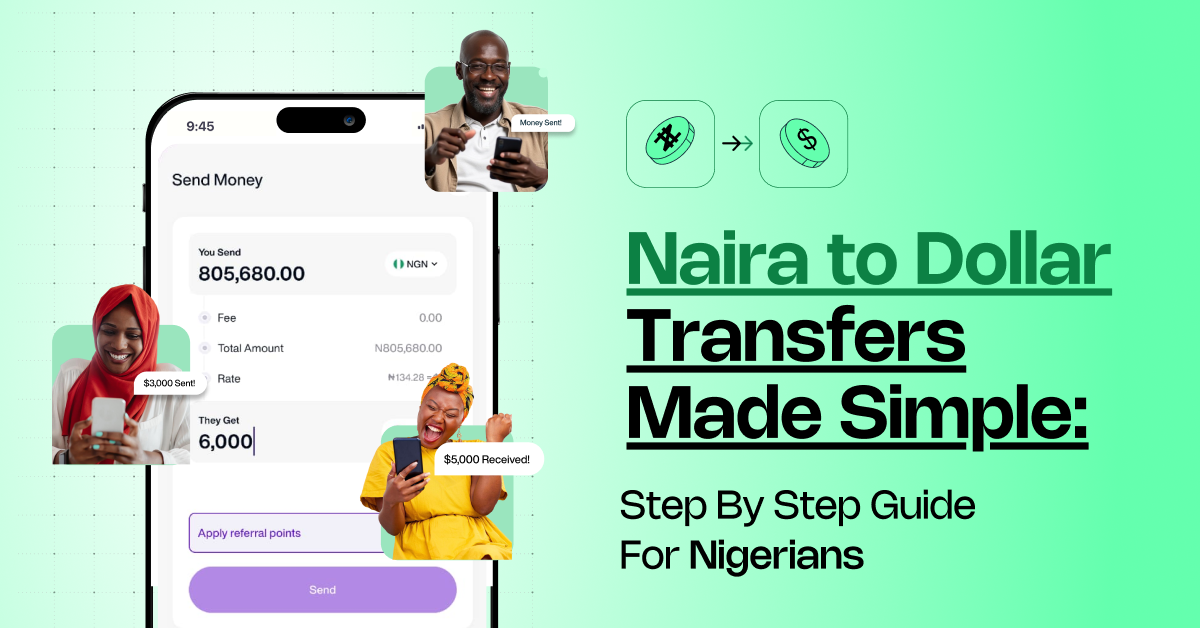

In Nigeria, few phrases carry as much weight as “Naira to Dollar transfers.” This is because this phrase affects a huge chunk of our economy. It’s not just about exchange rates; it also affects how we live, work, school, and even purchase in the country. The Naira to Dollar conversion shows up in every sphere of life, like an entrepreneur buying goods from overseas, parents paying their children’s tuition abroad, or even a freelancer getting paid by an international client.
But if we’re being honest, transferring money between these two currencies hasn’t always been smooth. Between unpredictable exchange rates, high bank charges, and painfully slow transactions, many Nigerians have learned to dread the process.
You might be wondering where the good news comes in. Well, with Yolat, sending and receiving dollars is basically a walk in the park. Money transfers across borders are becoming faster, simpler and way less stressful. This guide breaks down what you need to know about Naira to Dollar transfers, the common mistakes people make, and how you can be smart about it.
Why Naira to Dollar Transfers Matter So Much
Before we get into the ‘how’ and proffer a solution to the problem, we need to talk about the ‘why.’ Why is this a problem, and why does it matter so much?
For millions of Nigerians, getting access to dollars is not optional; it’s basically about survival. Here’s why:
Students abroad: Paying tuition and living expenses often requires parents/relatives in Nigeria to send money directly in dollars. Tuition fees are usually charged in dollars (or another foreign currency), and landlords abroad definitely don’t want to hear excuses when rent is due.
The stressful part is that timing is everything. Imagine a parent rushing to pay school fees before a deadline, only for the bank to delay the transfer for three business days (typical Nigerian bank behaviour). Or a student stranded abroad because the money for rent hasn’t cleared yet, even though it left Nigeria last week. These are not rare scenarios; they’re the kind of real-life struggles that make people dread international transfers.
Freelancers and remote workers: Freelancing and working remotely for countries abroad have become the order of the day in Nigeria. According to the Nigerian Bureau of Statistics (NBS), in Q3 2023, 87.3% of employed Nigerians were primarily self-employed, with only 12.7% being primarily engaged as employees. As the unemployment rate continues to rise, more individuals seek alternative means of earning income, and the gig economy has emerged as a viable solution.
But here’s the struggle: earning in dollars is one thing, actually accessing those dollars in naira without stress is another. Many freelancers can relate to the frustration of watching payments vanish into thin air thanks to high transfer fees, poor exchange rates, or endless delays. You finish a project for a client in the U.S., they pay promptly, but by the time the money reaches you, it feels like half of it has disappeared. This is an issue.
Small/medium-sized business owners: Running a business in Nigeria that depends on international imports definitely comes with a lot of stress. Importers and exporters live in this constant back-and-forth, one week you’re paying a supplier in China or Turkey in dollars, the next week you’re waiting for a buyer abroad to send you payment in dollars that you’ll eventually need in naira.
The problem? Traditional banks and old systems make that process unnecessarily stressful. Payments get stuck for days, paperwork drags on, and by the time the money actually arrives, the exchange rate may have shifted against you. For importers, that delay can mean goods are held up at the port. For exporters, it can mean losing trust with foreign buyers who expect fast payments. In all these cases, the gap between the naira and the dollar can either open doors or close them. That’s why being smart about transfers is essential.

The Step-by-Step Guide to Naira to Dollar Transfers
Step 1: Define your goal
Before transferring money, be clear on why you’re sending or receiving said money. It sounds simple, but it matters. If you’re paying school fees, you need a platform that’s reliable and fast. If you’re a freelancer, you need a platform with the best conversion rate. And if you’re running a business, you need smooth cross-border payment platforms.
Knowing your purpose helps you pick the right transfer option. With Yolat, the platform is flexible enough to serve all these needs.
Step 2: Understand Exchange Rates
A small difference in rate can mean a big difference in what lands in your account. Traditional banks often give less competitive rates. Platforms like Yolat focus on keeping rates fair and transparent. Always double-check that the rate you see is the rate you’ll get.
Step 3: Choose a Platform That Understands Nigeria
Global apps may look fancy, but many don’t understand the Nigerian market. Like the urgency of sending school fees, the importance of fair rates, or the reality of inconsistent bank systems.
Yolat is different because it was built with Nigerians in mind. It’s not just about transferring money; it’s about solving the very problems Nigerians face daily when moving between naira and dollar.
Final Thoughts: Stress-Free Is the Smart Way
At the end of the day, the difference between a stressful transfer and a smart one is simple: your choice of platform.
The smart Nigerian doesn’t waste time battling with hidden fees, slow banks, or unreliable middlemen. They choose tools that work for them. And right now, Yolat is that tool, the bridge between naira and dollar, built to make your life easier. So if you’re ready to send or receive money across borders without the headache, the path is clear. Maintain your peace of mind when you download our app on the Play store or App Store.
Leave a Reply