

A Simple Guide for Nigerians in the UK
Introduction
Sending money home is an unspoken tradition that every Nigerian with relatives abroad understands, and those living abroad do it regularly. Over time, the value of £100 in Naira has increased, yet the purchasing power of that same amount in Naira has significantly dropped.

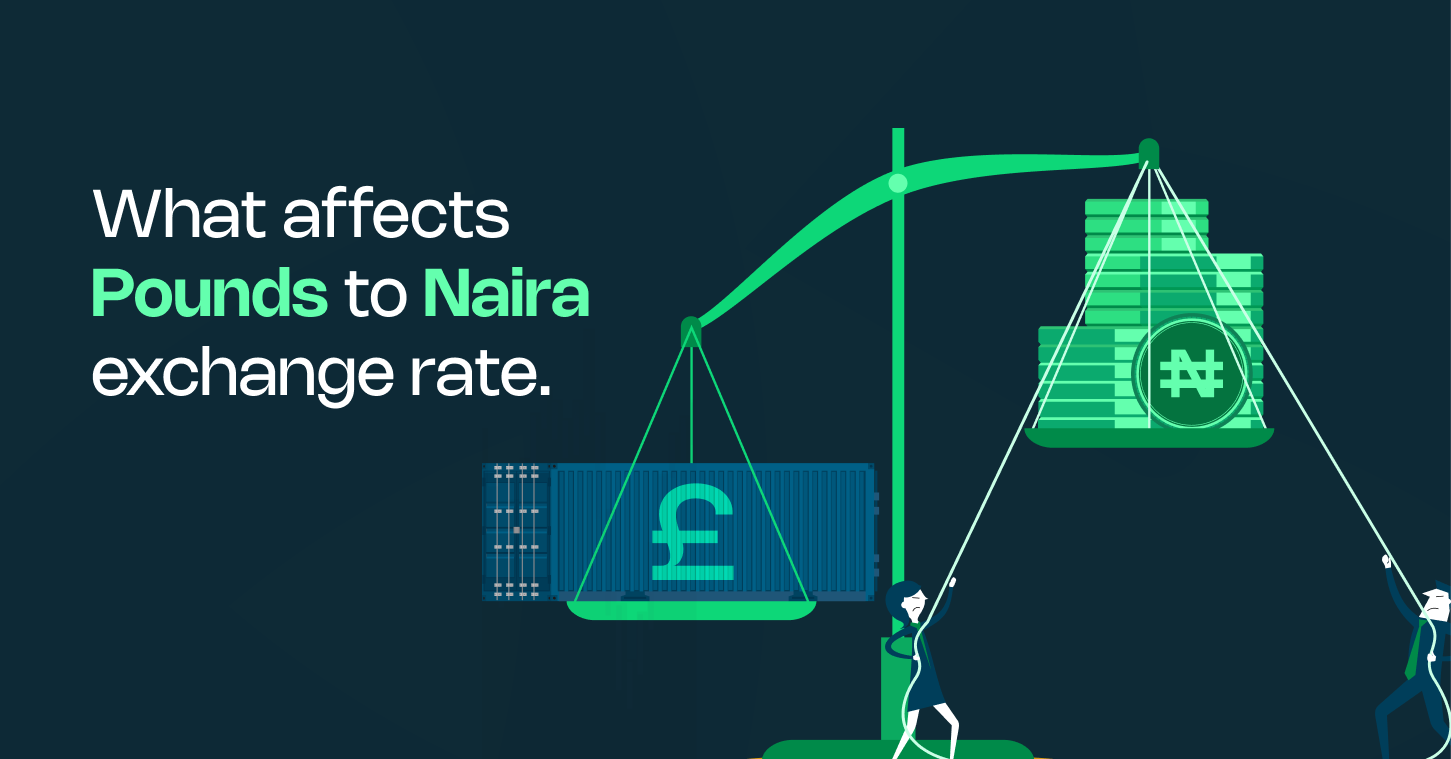
In this guide, we’ll explore why Pounds to Naira exchange rates fluctuate and the factors responsible for these changes.
5 factors that impact the Pounds to Naira exchange rates
1. Supply and Demand in the Currency Market
The foreign exchange market works like any other: prices (exchange rates) are influenced by supply and demand.
When the demand for British Pounds (GBP) in Nigeria increases, due to higher import needs the Naira weakens. Conversely, if demand for GBP drops or if the demand for Naira rises (e.g., from foreign investments), the Naira stabilises or strengthens.
A relatable scenario is during Detty December. There’s high demand for the Naira as Nigerians and visitors convert Pounds to Naira for local spending. This seasonal demand often strengthens the Naira temporarily. However, in January, the trend reverses as people start buying Pounds again to return abroad, increasing GBP demand and pushing its value up.

Tip: December may be a smart time to exchange currencies strategically. As a user in the UK, your Yolat account will be in USDT (a stablecoin). You can easily fund your USDT wallet and send money to Nigeria. However, the exchange rate you get depends on current market pressures.
2. Inflation Rates and Economic Stability
Countries with low and stable inflation generally see their currencies appreciate over time. The UK typically maintains controlled inflation around 2%, as targeted by the Bank of England. In contrast, Nigeria has experienced more erratic inflation, rising from 13.25% in 2020 to 33.24% in 2024.

When inflation is high, a currency’s purchasing power declines. For instance, ₦10,000 that could buy a bag of rice in 2014 may not even purchase 3 derica in 2025. Meanwhile, in the UK, prices are more stable, so the purchasing power of the Pound holds steady over time, contributing to its consistent strength against the Naira.
3. Foreign Exchange (FX) Policies
In Nigeria, the Central Bank of Nigeria (CBN) regulates access to foreign exchange, which directly affects both official and parallel (black market) rates. The policies restrict commercial banks from offering customers foreign currencies at the official rate, pushing individuals to the black market, where the Naira is more volatile but reflects real market demand. In contrast, the Bank of England operates a transparent FX system. People can buy foreign currency through banks or post offices, reducing reliance on unofficial channels and increasing GBP stability.
4. Interest Rates Set by Central Banks
In theory, higher interest rates attract foreign investors, increasing currency demand and strengthening the currency. Although Nigeria has a higher interest rate (27.50%) than the UK (4.25%), the Naira remains weaker. Why, you might ask?
1. Nigeria has higher interest rates to
- Control inflation, which is often in double digits.
- Stabilise the Naira by encouraging savings in local currency.
- Discourage excessive borrowing and reduce the money supply
2. So Why Is the Naira Still Weaker Than the Pound?
Because investors are not just looking at interest rates, they consider:
- High inflation which erodes returns, reducing actual profit
- Political and economic instability
- Currency volatility, making it hard to predict real profits
3. The UK, on the other hand, attracts investment because it offers:
- Low inflation, interest rate hikes are seen as strategic and not a means to curb inflation.
- Stable governance and institutions
- Consistent economic performance, like strong GDP growth and reliable trade balances.
The green flags for investors are economic stability (high returns and a low-risk situation), which is more natural for the UK market.
5. Political and Economic Climate
Political events and economic announcements are powerful forces behind currency fluctuations. In Nigeria, events like Political instability, policy changes such as fuel subsidy removal or a controversial election outcome, can cause panic in the markets, triggering a sharp weakening of investor confidence, and impacting the foreign currencies entering the Nigerian market.
Aside from impacting the number of investors entering the market, it might cause capital flight, where businesses and individuals move money out of Nigeria because of political uncertainty or economic fears. In contrast, the British Pound benefits from political stability and consistent economic performance, such as GDP growth, Employment rates, and Manufacturing output, which builds investor confidence and attracts long-term foreign investment. Although the above fact holds, Brexit has been a case in point when the pound lost value.
Conclusion
The Pound to Naira exchange rate doesn’t have to be a mystery; it’s the result of a complex interplay of economic, political, and policy-driven factors. I believe this article has armed you with the knowledge on why the Pound holds more value than the Naira to ensure you can make smarter, more confident decisions when sending money to Nigeria.
Using Yolat guarantees you peace of mind in Africa and beyond. Maintain your peace of mind when you download our app on the Play store or App Store.
Leave a Reply